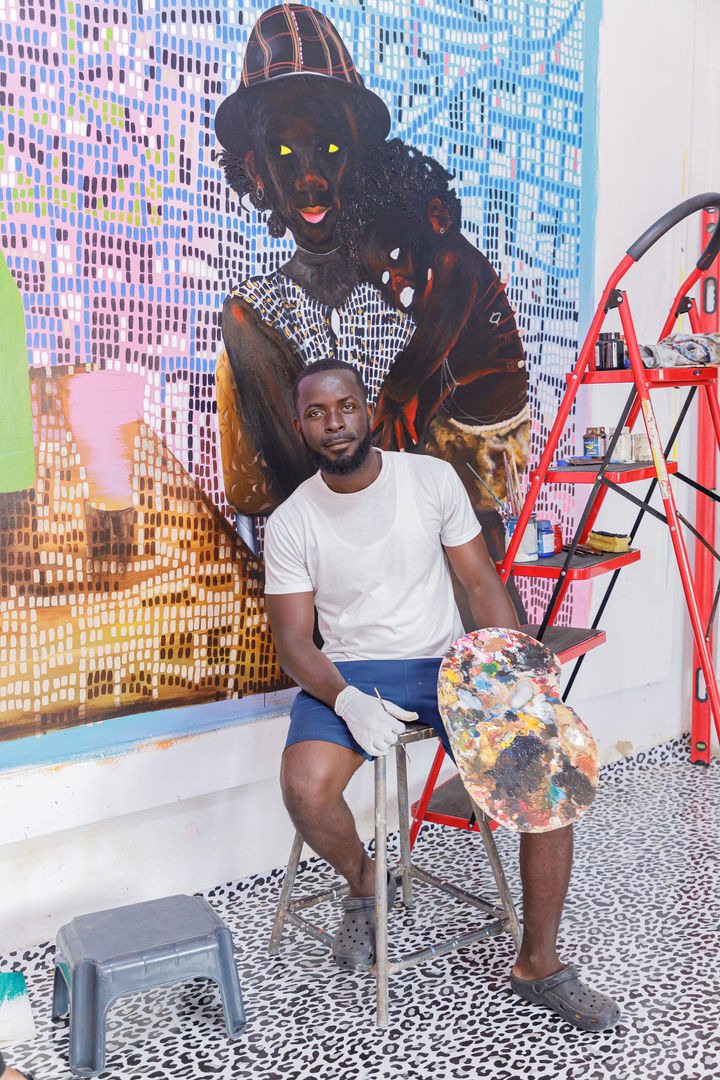
My artistic journey is driven by a passion to reclaim and celebrate the beauty of the Black body, often marginalized in the art historical canon.
Ishmael Armarh paints Black joy as a form of resistance. Against densely patterned backgrounds alive with color, his figures stand adorned, unapologetic, and fully present. Drawing from Ghanaian kente textiles, contemporary fashion, and decorative traditions ranging from Akan symbolism to Gustav Klimt, Armarh constructs portraits that refuse the Western ethnographic gaze. These are not subjects awaiting interpretation, but presences that assert their own authority.
Working primarily in acrylic, Armarh builds his surfaces through thousands of pointillistic marks. Saturated pinks collide with cerulean blues; golds layer over vermilions; geometric motifs multiply until the canvas becomes a site of visual abundance. This meticulous technique generates a sense of perpetual motion—at close range, pure chromatic energy; at a distance, legible and commanding form. Titles such as True Africanism, Young King, and Ashanti Queen signal deliberate acts of self-definition, replacing anthropological neutrality with cultural declaration.
Armarh’s subjects—often young women crowned in elaborate headwraps and draped in patterned cloth—meet the viewer’s gaze directly. Traditional adornment and contemporary style coexist seamlessly, collapsing distinctions between past and present. Color functions as both emotional and political argument: excessive, radiant, and resistant to the muted palettes that so often frame Black experience through loss or trauma. These paintings operate as acts of restitution, restoring dignity, complexity, and splendor to narratives long diminished. They do not seek entry into the canon; they demand a rethinking of its terms